Supports for ALL Students in Accessing Complex Text Using the Qualitative Measures Rubric Indicators
|
|
|
|
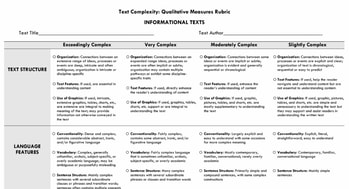
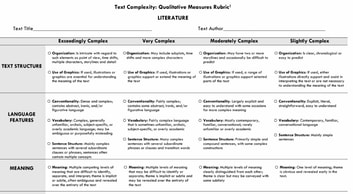
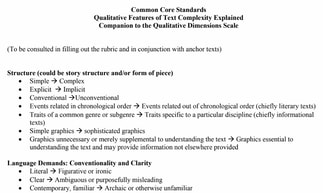
Text Structure
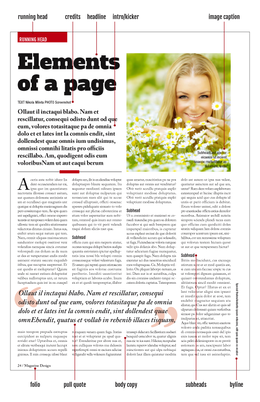
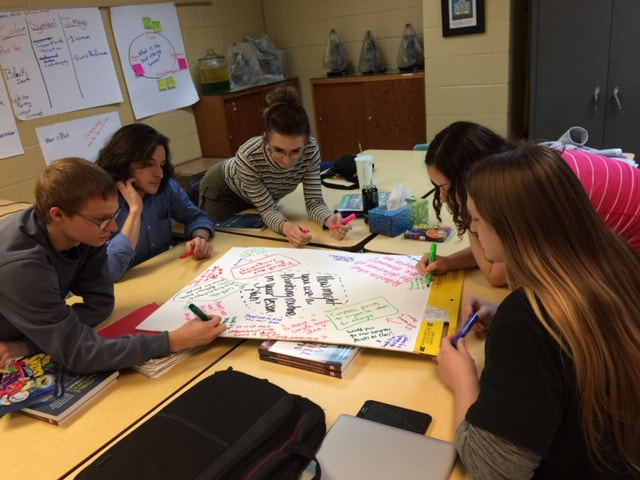
• Read the text with a partner • Read in small groups with an adult • Provide text specific sentence starters • Annotate key chronological or sequential events • Display, repeat and rephrase all text dependent questions • In small groups, annotate all informational text features • In small groups, illustrations and/or graphics are discussed using speaking and listening protocols • Provide graphic organizers • Format the text into “bite size” pieces by providing smaller portions. • Reformat the text to include more predisposed definitions, graphics, tables, or picture cues. |
|
Language Features
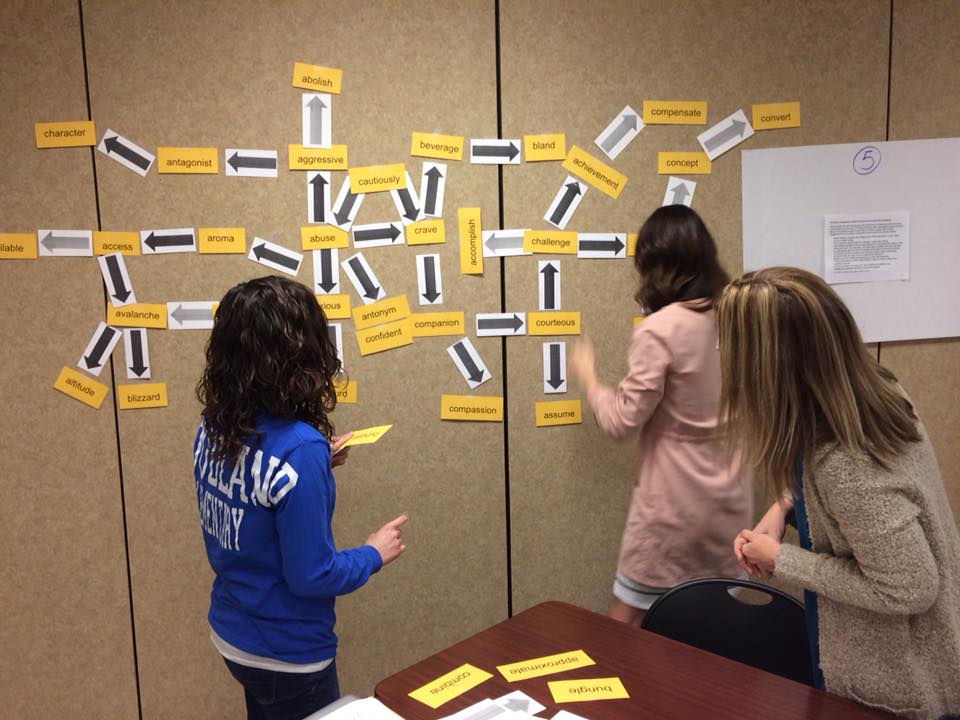
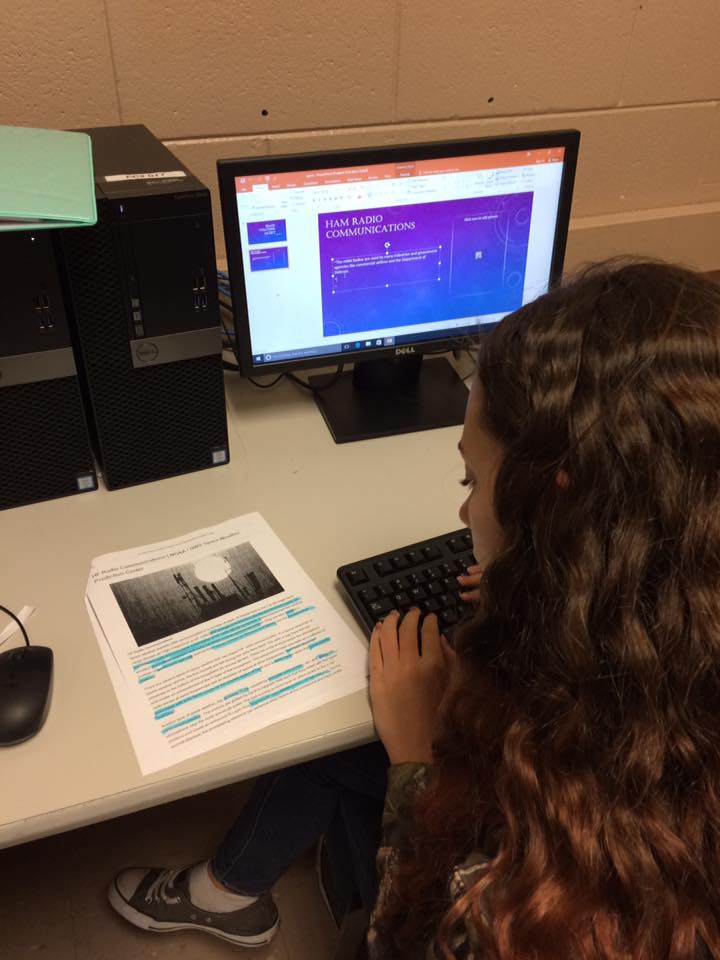
Teacher reads aloud the text: middle & high school; and read-alouds as special occasions • Paraphrase a student’s response and include academic language as a model • Utilize movement, gestures, and visual cues to demonstrate spoken or written language • Pre-teach or reinforce vocabulary in small groups • Provide students with language models (sentence frames, or academic vocabulary wall, language frame chart) • Explore sophisticated language (i.e. “juicy sentences”) for syntax focus/exposure • Provide opportunities for frequent checks on students’ understanding of word meanings through questioning, modeling, and group practice • In teaching vocabulary, pay more attention to cognates to support vocabulary growth • Identifying, bolding, and writing in the margins words that cannot be understood through the context of the text • Provide support defining words in context • Provide definitions of archaic or overly academic language • Consider using e-readers, Read & Write for Google Chrome, or other assistive technology for ease of access to online dictionaries |
|
Knowledge Demands
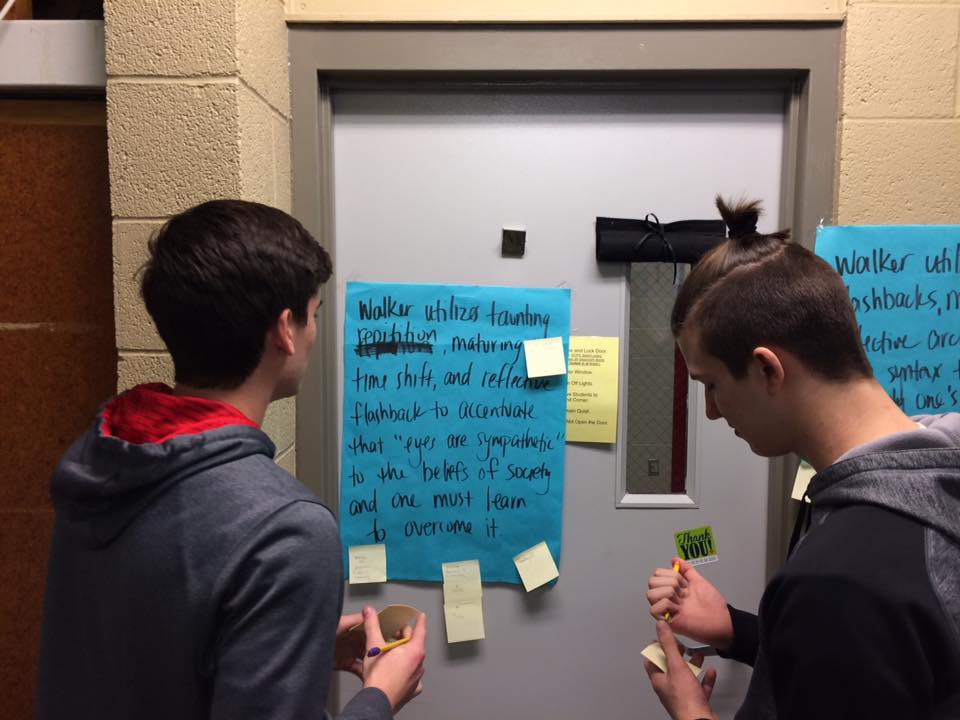
Link what a student is saying to prior knowledge or learning to come • Expand knowledge about how different texts are structured • Post and review content and language objectives so students are aware of the knowledge they are expected to master. • Provide opportunities for frequent checks on students’ understanding of knowledge through questioning, modeling, and group practice • Provide essential supporting information prior to reading the instructed text that cannot be learned from careful reading of the text • Offer readers more accessible texts in preparation for reading more difficult texts on a topic • Read informational text that focuses on one conceptually connected topic at a time since the concreteness supports language proficiency and vocabulary development • Expect precision with content while allowing room for non-native, imperfect or developing English Language usage. • Allow students to use native language to process content, language and text before responding in English • Format the text into “bite size” pieces by proving smaller portions. |
|
Purpose/Meaning
Teacher models a think aloud • Present directions and tasks orally and visually; repeat often • Rephrase questions to give students access • Prompt students to elaborate on a response • Provide opportunities for frequent checks on students’ understanding of purpose/meaning through questioning, modeling, and group practice • Consistently provide rehearsal time in small groups or pairs so students have more speaking and listening opportunities to build confidence • Structure questions and tasks to facilitate focused and targeted student discussions (e.g. cite evidence from the text) • Format the text into “bite size” pieces by providing smaller portions and provide opportunity to discuss at each interval • Acknowledge cultural and linguistic backgrounds of students in speaking and writing (e.g. presenting different perspectives or counter arguments) |
